

An RV breakdown is more complicated than a passenger-car breakdown due to the vehicle’s size, weight, construction, and onboard systems. A problem that might be manageable in a sedan can become much more difficult when you’re dealing with a motorhome, travel trailer, or larger recreational vehicle. If your RV cannot be operated safely, professional towing is often a better option than continuing to drive.
San Diego’s busy freeways and varied road conditions make this especially important. Whether you’re traveling through Sorrento Valley, Mira Mesa, Miramar, or University City, a disabled RV can be difficult to maneuver or position safely. Recognizing warning signs early can help you avoid additional vehicle damage and reduce the risks of being stranded on the road.
1. Your RV Has a Serious Mechanical Problem
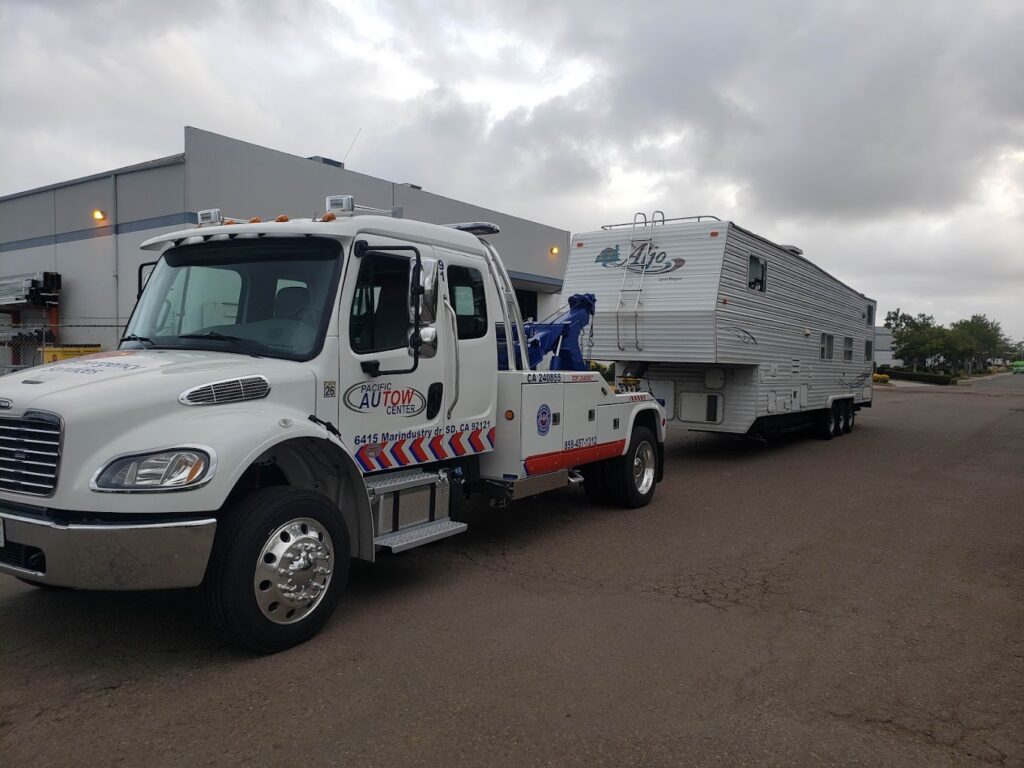
One of the clearest reasons to arrange professional RV towing in San Diego is a mechanical problem that prevents the vehicle from operating safely. Engine failure, transmission problems, severe overheating, major fluid leaks, or significant drivetrain issues can leave an RV unable to continue its journey. Continuing to drive after a serious mechanical warning may turn a repairable problem into a much more expensive one.
Watch for warning lights, unusual smells, smoke, grinding sounds, sudden power loss, or unusual changes in vehicle performance. If the RV begins losing power while traveling on a freeway, move to a safe location if you can do so without creating additional danger. Once the vehicle is safely positioned, contact a qualified towing provider and explain exactly what happened so they can dispatch the right equipment.
Why Continuing to Drive Can Make Things Worse
A vehicle that is already experiencing mechanical trouble may sustain additional damage when driven under load. This is particularly relevant for RVs because their weight puts considerable demands on the engine, transmission, cooling system, tires, and braking components. If the vehicle is overheating or losing essential fluids, continuing to drive may cause damage that timely towing could have prevented.
The safest choice isn’t always the most convenient. If a qualified mechanic or towing professional determines that the RV should not be driven, transporting it to a repair facility can help protect both the vehicle and everyone traveling in it. A professional tow truck service can also help ensure that the RV is moved using equipment appropriate for its size and condition.
2. Your RV Has a Tire or Wheel Problem
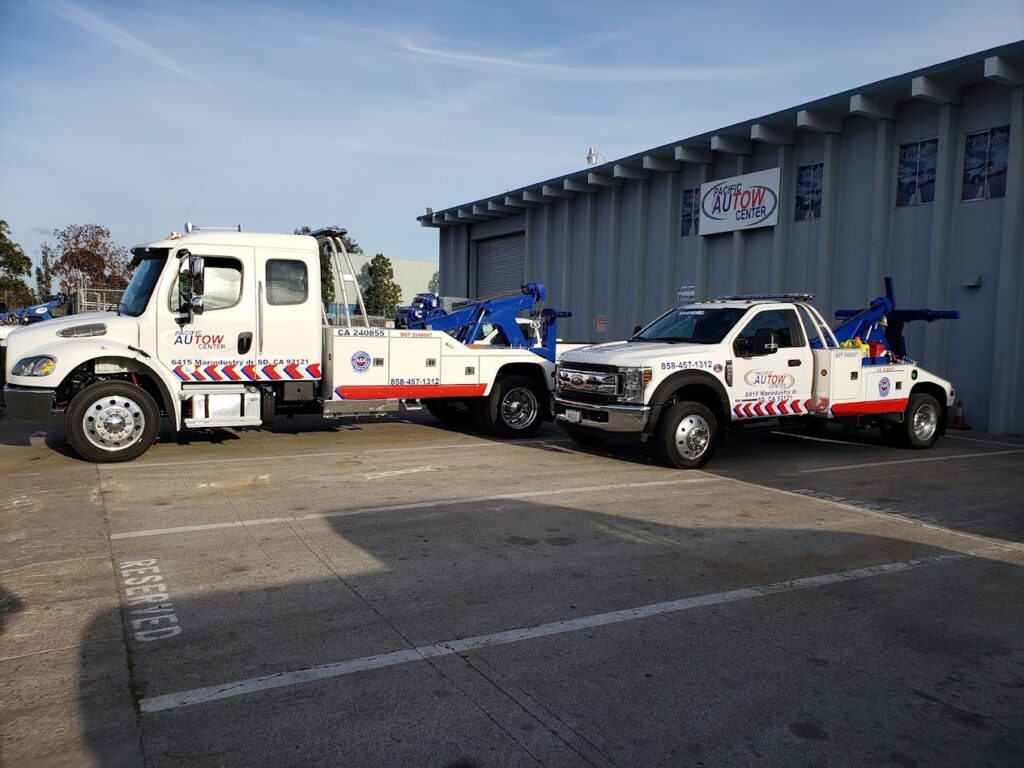
Tire problems are another major reason an RV may need professional towing. RVs place substantial weight on their tires, and a damaged tire can affect handling, stability, and braking. A simple puncture may sometimes be addressed with roadside assistance, but a shredded tire, damaged wheel, multiple tire failures, or suspected suspension damage may require more than a roadside repair.
Don’t assume replacing one tire automatically makes the RV safe to drive again. If the tire failure damaged the wheel well, brake components, suspension, or surrounding bodywork, you may need an additional inspection. When the vehicle’s condition is uncertain, professional towing is often safer than continuing a long-distance trip.
3. Your RV Cannot Start or Move Safely
An RV that will not start is an obvious candidate for towing, but the situation can become more complicated when the vehicle starts but cannot move normally. A dead battery may be resolved with a jump-start, while a more serious electrical, starter, transmission, or fuel-system problem may leave the vehicle immobilized.
If you have tried an appropriate roadside solution and the RV still cannot move, professional towing may be necessary. This is where people often begin searching for an “RV tow truck near me” or an “RV recovery service near me”, especially when they are stranded away from home. Before requesting service, provide the RV’s type, approximate size, location, and symptoms so the towing provider can determine the necessary equipment.
When Roadside Assistance Is Not Enough
Roadside assistance can help with problems such as a dead battery, a minor tire issue, a lockout, or an empty fuel tank. However, it is not a replacement for towing when the vehicle has a major mechanical failure or cannot safely operate after a roadside repair. Understanding that difference can prevent you from spending additional time trying to restart or drive an RV that needs to be transported instead.
For example, a successful jump-start does not necessarily mean the RV is ready for a long trip. If the battery is failing, the charging system is malfunctioning, or the vehicle immediately loses power again, driving farther could leave you stranded in an even less convenient location. In that situation, towing the RV to a qualified repair facility may be the more sensible solution.
4. Your RV Is Damaged After an Accident
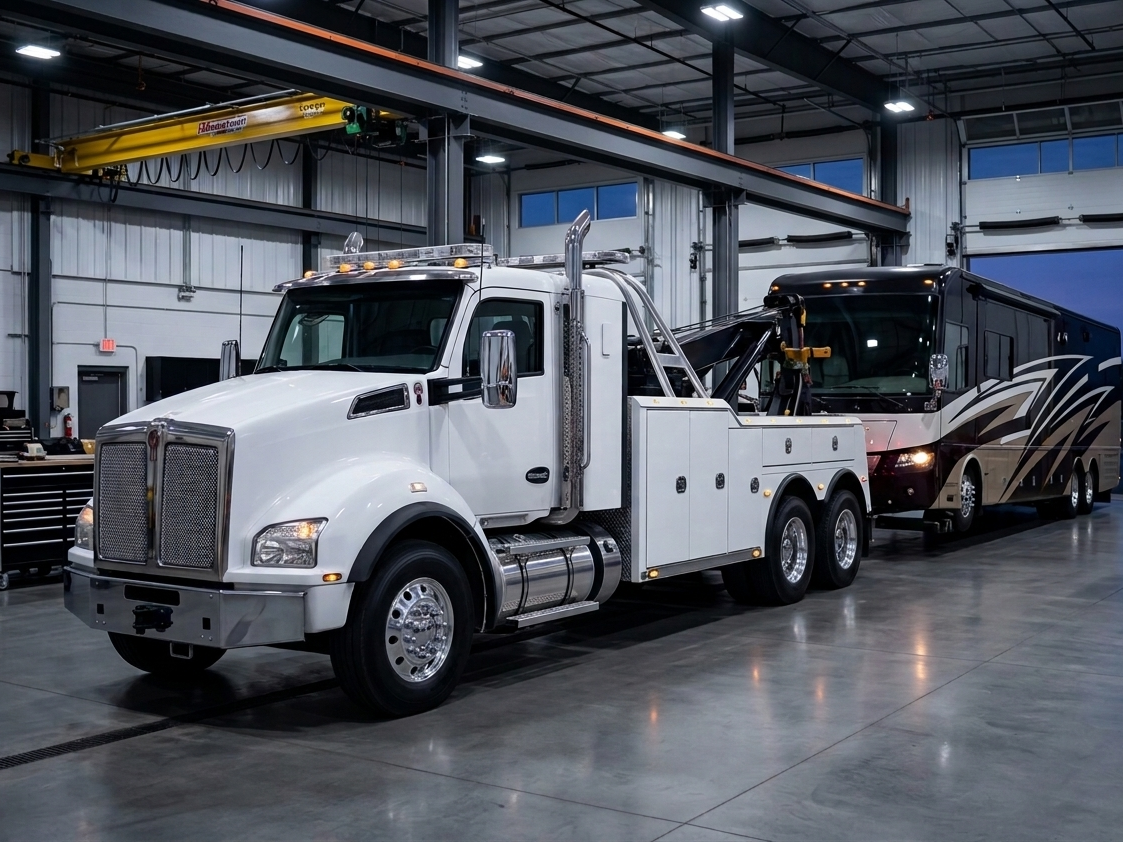
Collision damage is another strong indication that an RV should be professionally towed rather than driven away. Even when the exterior damage appears minor, the accident may have affected the steering, suspension, brakes, wheels, frame, electrical systems, or other components. Large recreational vehicles can also have unique body structures and onboard equipment that require careful handling after a collision.
If an accident occurs on I-5, I-805, I-15, CA-52, or CA-56, prioritize safety and follow emergency responders’ instructions. Do not attempt to drive the RV simply because it still starts. An appropriate emergency towing response on I-5, for example, can help remove a disabled RV from a hazardous location when the vehicle is no longer roadworthy.
Why Accident Damage Requires Extra Caution
An RV’s systems can extend beyond the vehicle’s basic mechanical components. Depending on the type of RV, an impact can affect appliances, water systems, electrical equipment, generators, storage compartments, and other components. Assess a damaged vehicle carefully before anyone attempts to drive it.
Professional towing also reduces the chance of aggravating existing damage. The provider can assess the vehicle’s position and determine the safest practical way to transport it. If the RV is obstructing traffic or located in an unsafe area, prompt removal can also reduce exposure to passing vehicles.
5. Your RV Is Overheating or Experiencing Brake Problems
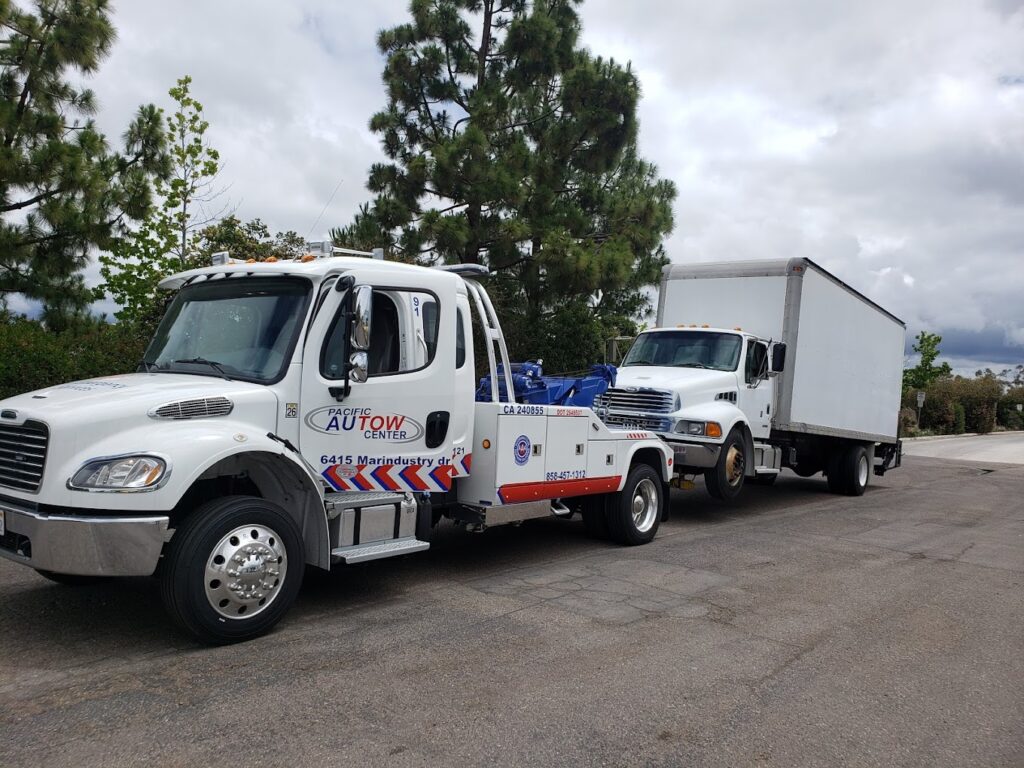
Overheating and brake problems deserve immediate attention because both can affect your ability to control the RV. An overheating engine may indicate a cooling-system failure, low coolant, a damaged component, or another mechanical issue. Brake problems are equally serious because an RV’s added weight requires dependable stopping performance, especially on grades or in heavy traffic.
If you notice a rising temperature gauge, steam, a burning smell, brake fade, unusual brake noises, or difficulty stopping, pull over safely as soon as possible. Do not continue driving simply to reach the next exit if doing so puts you or others at risk. Depending on the cause, professional motorhome towing in San Diego may be necessary to transport the vehicle for inspection and repair.
Where Can an RV Breakdown Become Especially Difficult in San Diego?
San Diego’s road network includes busy freeways, major connectors, commercial corridors, and neighborhoods with varying road conditions. An RV that breaks down in Sorrento Valley or Sorrento Mesa may be close to major freeway connections, while a problem around Mira Mesa or Miramar can create challenges when traffic is heavy. University City and surrounding areas can also experience significant traffic because of their proximity to I-5 and other major routes.
Kensington is farther from the major freeway corridors listed above, but an RV traveling through central San Diego can still encounter mechanical or tire problems before reaching a highway. The key factor is not the neighborhood, but whether the vehicle can be moved to a safe position. Giving the towing provider your exact location, direction of travel, and the nearest recognizable landmark can make coordinating assistance easier.
What Should You Do Before an RV Tow Truck Arrives?
Your safety should come before protecting the RV or diagnosing the problem. If you can move the vehicle safely, position it as far from moving traffic as practical and activate the hazard lights. If you can’t move it, stay in a safe position and avoid standing in or near active traffic lanes.
When contacting a towing company in San Diego, provide accurate details about the RV and its location. Mention whether it is a motorhome, travel trailer, camper, or another type of recreational vehicle. Also explain whether it has mechanical damage, accident damage, tire problems, or other issues that could affect loading and transport.
Useful information includes:
- Exact location and direction of travel
- Nearest exit, intersection, or landmark
- RV type, make, and approximate size
- Whether the vehicle starts and moves
- Visible mechanical or collision damage
- Tire or wheel condition
- Number of passengers
- Preferred destination, if known
The more accurate the information, the easier it can be for the towing provider to understand the situation before dispatching a vehicle.
Need help with an RV breakdown? Get directions to a trusted San Diego towing company for professional RV towing and roadside assistance when your vehicle cannot safely continue.
How Do You Choose the Right RV Towing Service?
Not every tow truck can handle every recreational vehicle. Before requesting service, confirm that the provider handles RVs and can accommodate the vehicle’s size, weight, and configuration. A provider experienced with larger recreational vehicles is better positioned to determine the appropriate equipment and towing method.
If you’re comparing motorhome towing or camper towing, look beyond proximity alone. Ask whether the provider offers the type of towing you require, whether service is available at your location, and whether there are additional charges associated with the RV’s size or circumstances. Clear communication before dispatch can help prevent delays and unexpected misunderstandings.
For drivers who need help outside normal business hours, a 24-hour towing service in San Diego can be particularly useful. However, always confirm availability when you call, especially if you are stranded on a busy highway or in an area where safe access is difficult.
Can RV Towing Help You Avoid Further Damage?
Yes, professional towing can reduce the risk of additional damage when an RV has a serious mechanical, tire, brake, or accident-related problem. The key is using equipment and procedures appropriate for the particular vehicle. Incorrect towing can potentially affect driveline components, tires, suspension, bodywork, or other systems.
This is one reason it is important to describe the RV accurately before dispatch. A motorhome and a travel trailer do not necessarily require the same approach, and a damaged vehicle may need special handling. Complete information lets the towing provider plan ahead rather than discovering critical details only upon arrival.
FAQs
When should I tow my RV instead of driving it?
Consider towing when the RV has serious mechanical, tire, brake, overheating, or collision problems that make driving unsafe. If you are unsure about its roadworthiness, having it professionally assessed and transported may be safer than continuing the trip.
Can an RV be towed from I-5 or I-805?
Yes, RV towing may be available on major San Diego freeways, including I-5 and I-805, depending on the vehicle, location, road conditions, and service availability. When requesting assistance, provide your direction of travel, nearest exit, and exact location.
What is the difference between motorhome towing and camper towing?
Motorhomes are self-powered recreational vehicles, while campers can include travel trailers and other towable units. Their construction, weight distribution, and towing requirements can differ, so the provider should know exactly what type of RV needs assistance.
How quickly can an RV tow truck arrive?
Arrival time depends on traffic, the RV’s location, current demand, road conditions, and the availability of suitable towing equipment. Providing precise location information helps the provider locate you and coordinate the right response.
Conclusion
An RV breakdown doesn’t always mean the entire trip has to end immediately, but knowing when to stop driving can make a major difference. Serious mechanical problems, damaged tires or wheels, starting or mobility issues, accident damage, overheating, and brake problems are all situations where professional towing may be the safest choice. In San Diego, this matters even more on busy routes such as I-5, I-805, I-15, CA-52, or CA-56.
Whether you’re traveling through Sorrento Valley, Sorrento Mesa, Mira Mesa, Miramar, University City, Kensington, or elsewhere in San Diego County, preparation can make an unexpected breakdown easier to manage. Keep your RV maintained, know how to communicate your location, and choose a towing provider that understands RV requirements. The right response can help protect your RV, your passengers, and other road users.


